
When we think about professional growth, one of the most powerful tools we have is also one of the most challenging: feedback. For many, the word itself can bring up feelings of discomfort or defensiveness. Yet when we lean into it with openness and intention, feedback becomes a catalyst for learning, connection, and meaningful change.
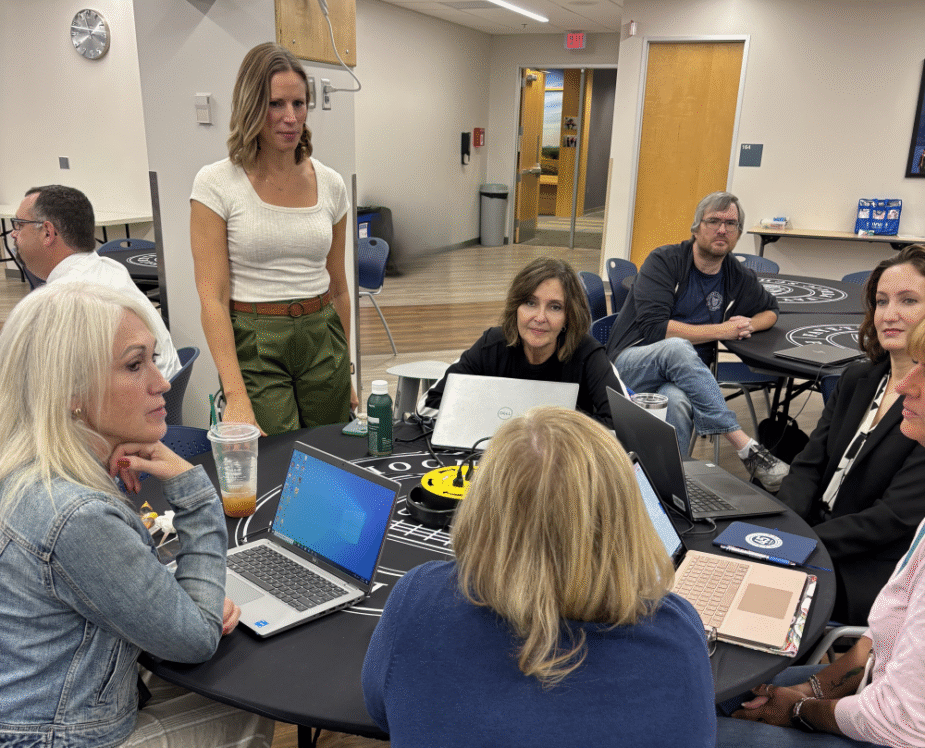
Recently, I had the opportunity to work with the Fayette County Public Schools (KY) technology team, a group of more than 70 who came together for an ALP Institute focused on feedback and professional growth. Together, we explored two key learning outcomes: identifying personal opportunities for professional growth, and understanding the structure, intent, and value of feedback processes as tools for both personal and team development.
The Institute provided space for reflection, collaboration, and practical application and an environment where feedback wasn’t just discussed but experienced.
Why Feedback Matters
Feedback is not simply about pointing out what needs improvement. Done well, it drives growth, strengthens relationships, and builds a culture where trust and learning flourish. At its core, feedback is about seeing one another clearly. It means acknowledging strengths while also identifying opportunities to grow.
When feedback is timely, specific, and focused on behaviors rather than people, it becomes actionable. It moves us past vague encouragement or critique into constructive conversations that fuel professional development. Technology team members often don’t hear feedback until something isn’t working. At the institute, I was able to observe one team member giving positive feedback to a colleague about a specific instance where he worked tirelessly, after hours, to solve a problem that allowed schools to continue functioning without interruption. His face lit up at the recognition, as did others watching the conversation as they saw how easy it is to give feedback that leads to positive impact.
Creating a Culture of Trust
For feedback to thrive, employees must feel safe sharing openly. During the Institute, participants reflected on how psychological safety — knowing their voices would be heard without fear of judgment — enabled deeper conversations and authentic engagement.
Psychological safety often looks and sounds like this:
- Team members saying, “I might be wrong, but here’s what I noticed…” or “Can I share a different perspective?”
- Colleagues nodding, paraphrasing, or asking clarifying questions rather than rushing to respond.
- Leaders acknowledging vulnerability by saying, “Thank you for sharing that. It helps us all grow.”
When a leader or facilitator conveys that contributions are valued, it can be through simple but powerful actions like actively listening, referencing someone’s idea later in discussion, or inviting quieter voices to the table. Statements like, “That’s a great point, let’s build on it,” or “I appreciate how you connected that to your experience,” reinforce that feedback is not just tolerated but welcomed.
That sense of trust allows diverse perspectives to surface and ensures that communication flows not only from leaders to teams but also laterally and upward.
When we normalize feedback as part of everyday practice, we create space for authentic dialogue, collaborative learning, and stronger communities of educators.
A Framework for Feedback
To give structure to the process, we practiced the SBI Model:
- Situation – Clearly describe the context.
- Behavior – Focus on specific, observable actions or words.
- Impact – Explain the direct effect of the behavior.
This approach strips away ambiguity, keeping feedback constructive and balanced. For many, it felt different than methods they had used before, less about judgment and more about clarity and growth.
For example:
- Situation: “During our tech support meeting on Monday…”
- Behavior: “…you shared a step-by-step process for troubleshooting Chromebook logins.”
- Impact: “That clear modeling helped newer team members feel more confident assisting schools.”
Or:
- Situation: “When the network issue came up during testing last week…”
- Behavior: “…you communicated updates to the school leaders right away and stayed calm under pressure.”
- Impact: “Your composure set the tone for the team and helped everyone stay solution-focused.”
And sometimes, the feedback highlights an opportunity for growth:
- Situation: “In our small group today…”Behavior: “…I noticed that you jumped in with answers before others had a chance to share.” Impact: “That may have limited some valuable perspectives. Next time, you could pause to invite input before responding.”
Through examples like these, participants saw how the SBI framework keeps feedback focused on observable actions rather than assumptions. It invites dialogue, promotes reflection, and strengthens the culture of trust that makes continuous learning possible.
Practicing and Applying Feedback
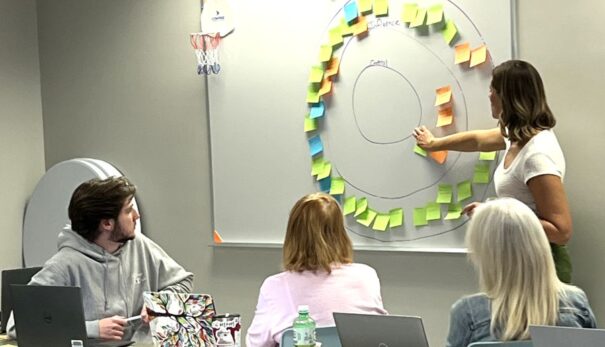
Like any skill, giving and receiving feedback takes practice. The institute provided that practice ground, with time to test the SBI framework, share observations, and reflect on what was challenging or beneficial. Participants left considering questions such as:
- Who do I feel most comfortable giving feedback to?
- Who do I trust to give me honest feedback?
- How can I push myself to go deeper in both directions?
Carrying Feedback Forward
What makes institutes powerful is that they do not stop when the session ends. The conversations, strategies, and shared experiences ripple outward, shaping personal growth plans, strengthening professional communities, and inspiring new ways of working together. That afternoon, a participant of the morning institute stopped me to share that she told a colleague about the SMI framework and that lady was excited to put it into practice, as well. The director of technology received a similar email during our afternoon together sharing SBI feedback with her about the institute and how grateful she was for the experience. Feedback, embedded in daily routines, becomes less of a formal exercise and more of a cultural habit.
Ultimately, feedback is a tool for empowerment. It helps us take ownership of what is within our control, recognize where we can influence, and design growth plans that align with our goals. When we normalize feedback as part of everyday practice, we create space for authentic dialogue, collaborative learning, and stronger communities of educators.
That is the kind of growth an institute sparks, growth that extends well beyond a single session and becomes part of how we teach, lead, and learn together.
Learn how ALP’s Institutes can provide professional growth for your organization.
Janelle McLaughlin is a Senior Partnerships Consultant at Advanced Learning Partnerships. Follow Janelle on LinkedIn.
